logo
Fengcheng Fire Turbocharger Manufacturing Co., Ltd
About Us

Fengcheng Fire Turbocharger Manufacturing Co., Ltd

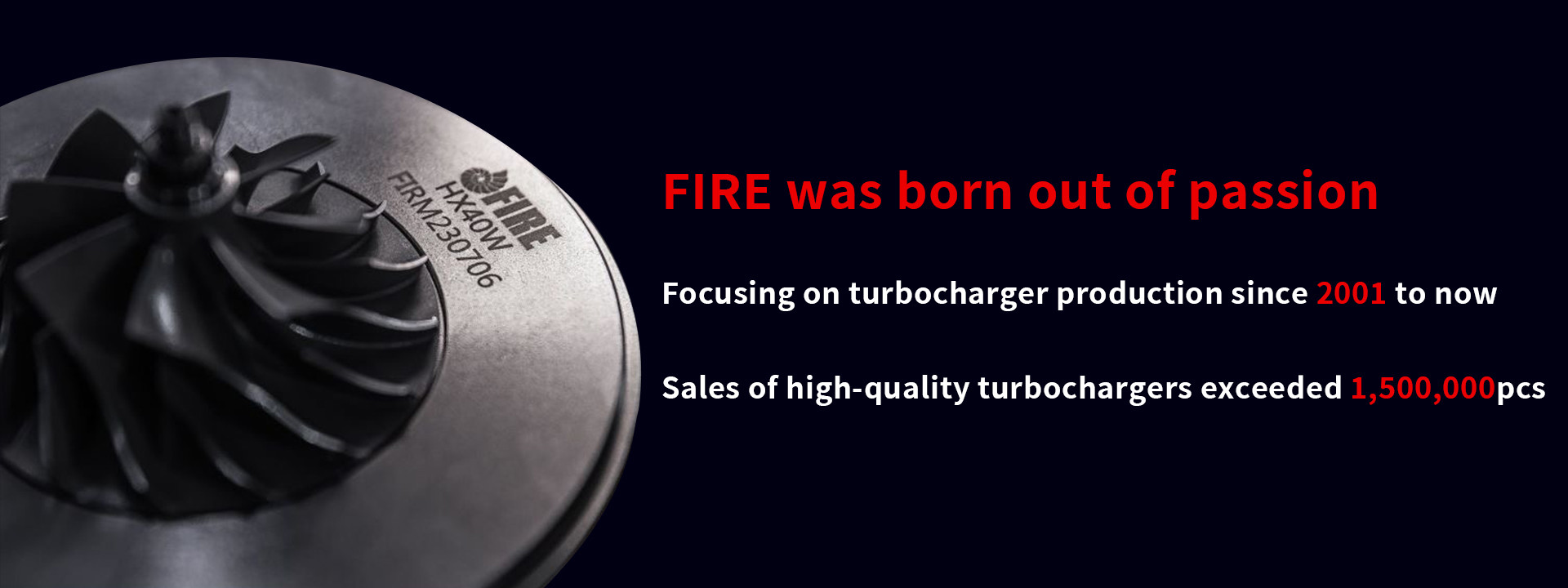
FIRE was born out of passion - focusing on turbocharger production from 2001 to now. The sales of high-quality turbochargers have exceeded 1,500,000pcs. With advanced production technology, modern management and quality control, a large amount of technical research and development investment, the annual production capacity continues to grow.FIRE continues because of trust - we have provided high-quality products and thoughtful, personalized services to customers in more than 40 countries on four ...
View More
China Fengcheng Fire Turbocharger Manufacturing Co., Ltd

2001

Year Established

1000 +

Annual Sales

1400 +

customers served

20 +

Employees

News
Calidad de equipo original (OEM) a una fracción del costo: Así estamos redefiniendo el mercado de turbos de posventa.
2026-03-04
¿Está cansado de tener que elegir entre costosos repuestos originales y alternativas baratas pero poco confiables?     Para muchos distribuidores de camiones pesados y talleres mecánicos —especialmente en mercados como Sudamérica— adquirir turbocargadores originales (OEM) se ha vuelto un costo insostenible. Sin embargo, optar por los repuestos genéricos más baratos suele resultar en fugas de aceite, daños en la turbina y clientes insatisfechos.     Queremos cambiar esta realidad. Como fabricante profesional de turbocargadores en China, ofrecemos una solución que combina el rendimiento de nivel original con precios hasta un 70% más bajos que las marcas reconocidas. ¿Cómo lo logramos? 1. Precios inigualables: ¿De dónde proviene su margen de ganancia? No somos una empresa comercializadora (trading company), somos la fábrica. Al trabajar directamente con nosotros, elimina a todos los intermediarios. Precio de marca: Alta prima por el nombre + Complejos niveles de distribución. Nuestro precio: Costo de materia prima + Fabricación eficiente + Margen razonable de fábrica.   ​Este modelo de precios permite que su empresa sea altamente competitiva en su mercado local, manteniendo al mismo tiempo un margen de ganancia saludable. 2. Calidad sin concesiones: Nuestra "Promesa de Tranquilidad" Un precio bajo no tiene sentido si el producto es defectuoso. Sabemos perfectamente que en países como Brasil, Chile y Perú, los camiones transitan por caminos difíciles y transportan cargas pesadas. Un turbo con rendimiento deficiente simplemente no durará. Por eso, nunca escatimamos en calidad: Materiales: La rueda de la turbina está fabricada con aleación K418 Inconel, capaz de soportar temperaturas de hasta 900°C sin deformarse. ​   Pruebas: Cada núcleo del turbo (CHRA) se somete a pruebas de equilibrio dinámico de alta velocidad. Confiamos en los datos, no en la intuición.​ ​ ​   Certificación: Nuestra fábrica produce estrictamente bajo las normas ISO y CE. ​ Nuestra tasa de defectos es cercana a cero, porque la calidad es nuestra prioridad. No solo le entregamos un turbocargador, le entregamos tranquilidad. 3. Soporte real para su negocio Entendemos los riesgos de probar un nuevo proveedor en China, por eso facilitamos su decisión: Pedidos de prueba pequeños: No exigimos un contenedor completo. Puede comenzar con un pedido mínimo de 5 unidades Garantía de 12 meses: Si surge algún defecto de fabricación, ofrecemos un año de garantía. Embalaje seguro: Diseñado específicamente para el transporte marítimo de larga distancia, asegurando que la mercancía llegue intacta a su almacén.​ ​ En resumen: Ya no necesita sacrificar la calidad por un precio más competitivo. Si necesita turbocompresores para las principales marcas de automóviles, podemos ofrecerle a su empresa productos confiables y un valor inigualable.                
Read more
Latest company news about Calidad de equipo original (OEM) a una fracción del costo: Así estamos redefiniendo el mercado de turbos de posventa.
Maintenance Guide: 5 Key Practices to Extend Turbocharger Lifespan!
2026-02-05
The turbocharger is one of the components operating under the most severe conditions in a modern engine system. It must withstand exhaust gas temperatures as high as 900°C or even more, while its rotor often spins at speeds exceeding 100,000 RPM. Under such extreme operating conditions, a turbocharger is not a "maintenance-free" component. In fact, most turbocharger failures are not caused by product defects themselves, but rather stem from insufficient lubrication, foreign object ingestion, or improper temperature management. To help you reduce repair costs and maintain your vehicle's optimal performance, we have compiled the following 5 practical maintenance recommendations based on engineering principles. 1.Lubrication is the Lifeline: The "Three Principles" of Oil Management The turbocharger's main shaft typically uses a journal bearing design, relying on an extremely thin oil film to separate the high-speed rotating shaft from the bearing. Once this oil film breaks down or becomes contaminated, irreversible wear between the bearing and shaft can occur within seconds. Use Full Synthetic Oil Strictly:Compared to mineral oil, full synthetic oil has stronger oxidation resistance at high temperatures and is less prone to coking. Always use oil with the viscosity grade specified by the vehicle manufacturer (OEM). Shorten Oil Change Intervals:If your vehicle is frequently driven in stop-and-go traffic, under heavy load, or in high-temperature environments, it is recommended to appropriately shorten the maintenance intervals. Carbon particles in dirty oil act like sandpaper, rapidly wearing down the precision main shaft. Pre-lubrication (For Extended Periods of Inactivity): If the vehicle has been parked and not started for over a month, it is recommended to crank the engine for a few seconds (with the ignition system disabled) before a normal start. This builds oil pressure to avoid dry friction upon ignition. 2.Temperature Management: Avoid "Flooring a Cold Engine & Shutting Down Immediately After a Hot Run" Sudden temperature changes are a hidden killer for turbochargers. Warm Up After Starting: After starting the engine, let it idle for 30-60 seconds (longer in winter). It takes time for oil to pump from the oil pan to the turbocharger. Revving the engine hard before oil pressure and temperature reach operating conditions causes the turbo bearings to spin at high speed with insufficient lubrication. Idle Before Shutdown (Crucial): Do not shut off the engine immediately after prolonged high-speed driving or hill climbing. Principle: The turbine housing is extremely hot after full-load operation. If the engine is shut off immediately at this point, the oil pump stops working. The oil trapped inside the turbo cannot circulate to dissipate heat and gets "baked dry," forming coke deposits (Oil Coking). These coke deposits can block oil passages, potentially causing the turbo to seize upon the next start. Recommendation: Reduce speed and drive gently for the last 3 minutes before your destination, or let the engine idle for 2-3 minutes after parking to allow oil circulation to carry away the residual heat. 3.The Breathing System: Prevent Foreign Object Ingestion The turbocharger's compressor wheel spins at extremely high speeds. Any tiny particles entering it can cause catastrophic damage. Inspect the Air Filter Regularly: Do not attempt to clean a disposable paper air filter by "blowing it out." A clogged filter increases intake resistance, leading to uneven axial forces on the turbo shaft. A damaged filter will allow dust to pass through, eroding the compressor blades and disrupting dynamic balance. Check Hose Seal Integrity: Inspect the hoses and clamps between the air filter housing and the turbocharger intake for cracks or looseness. Unfiltered air (containing dust/sand) entering the turbo directly causes a "sandblasting" effect, severely shortening its lifespan. 4.Don't Neglect the Positive Crankcase Ventilation (PCV) System This is a frequently overlooked but critical issue. Principle: The turbocharger's oil return relies on gravity to drain back to the oil pan. If the engine's Positive Crankcase Ventilation (PCV) valve becomes clogged, pressure inside the crankcase increases. This pressure hinders the turbo's oil drainage, forcing oil to leak past the turbo's piston ring seals into the intake or exhaust tracts. Symptoms and Solution: If you notice blue smoke from the exhaust but the turbo bearings show no excessive play, prioritize inspecting and cleaning/replacing the PCV valve instead of rushing to replace the turbocharger. 5.Listen and Observe: Early Warning Signs A turbocharger usually shows warning signs before complete failure. Early detection can prevent consequential damage to the engine Abnormal Whining/Squealing: Normal turbo operation produces a mild airflow sound. However, sharp metallic scraping noises or siren-like whining often indicate damaged compressor/turbine wheels or worn bearings. Reduced Power/Increased Lag: This could be due to an intake air leak (boost leak) or a stuck wastegate actuator. Sharp Increase in Oil Consumption: Blue smoke from the exhaust is typically a sign of failing turbocharger seals. Conclusion The turbocharger is a masterpiece of precision engineering, delivering efficient power. By developing good driving habits (especially idling to cool down after hard driving) and adhering to strict oil maintenance discipline, you can easily ensure your turbocharger lasts as long as the engine itself.
Read more
Latest company news about Maintenance Guide: 5 Key Practices to Extend Turbocharger Lifespan!
Ball Bearing vs. Journal Bearing: How to Select the Best Turbocharging Solution for Your Market
2026-03-06
In the international turbocharger trade, the choice of bearing system is not just a matter of performance—it directly impacts your after-sales costs and end-user satisfaction. As a professional turbocharger manufacturer, we frequently receive inquiries from global wholesalers regarding the selection of Ball Bearings versus Journal Bearings.     Today, we analyze the differences from technical, market application, and commercial perspectives to help you make informed decisions.   1. Journal Bearings: The Cost-Effective Industry Standard Journal bearings are the most widely used and mature technology in the global automotive aftermarket today. Working Mechanism: They rely on a high-pressure hydrodynamic oil film to support the rotor. Essentially, the rotor "floats" on this layer of oil.   Commercial Advantages: Extreme Durability: As long as the engine lubrication system is well-maintained, journal bearings experience almost no mechanical wear. They are ideal for high-load conditions found in long-haul trucking and construction machinery. Cost Competitiveness: The relatively simple structure makes them the top choice for large-scale wholesale, allowing you to offer highly competitive prices to your clients. Ease of Maintenance: They have a slightly higher tolerance for installation environments compared to ball bearings, reducing the risk of early warranty claims due to improper installation. Target Market: Commercial vehicles (trucks, excavators), the OEM replacement market, and the price-sensitive passenger car repair market.   2. Ball Bearings: The Premium Choice for High-Performance Markets   With the rise of global car modification culture and the demand for transient response, the share of ball bearing turbos in high-value orders is increasing annually. Working Mechanism: Utilizes high-precision ceramic or steel balls to support the rotor instead of an oil film. Performance Premiums: Transient Response: Compared to journal bearings, ball bearings reduce startup friction by nearly 50%. This means the turbo spools up faster at low RPMs, providing a more linear driving feel. Axial Load Capacity: They can withstand higher exhaust pressures, ensuring the rotor maintains extreme running precision even under high-boost conditions. Fuel Efficiency: Lower mechanical loss contributes to improved overall thermal efficiency of the engine. Target Market: Performance upgrades, racing applications, and high-end passenger car owners who prioritize fuel economy and a premium driving experience. 3. Wholesaler Decision Guide: Optimizing Your Inventory Structure     To meet diverse overseas market demands, we suggest wholesalers adopt a differentiated inventory strategy:   For Industrial & Logistics Hubs (e.g., Southeast Asia, Africa, Middle East): Recommendation: Focus primarily on Journal Bearing series. These regions are extremely sensitive to product ruggedness and repair costs. Journal bearings effectively withstand harsh operating environments, such as fluctuating oil quality and long periods of idling. For Developed Passenger Car & Tuning Markets (e.g., Europe, North America, Australia): Recommendation: Increase the proportion of Ball Bearing series. End-users in these markets are willing to pay a premium for faster throttle response and cutting-edge technology. This is a key product line for expanding your profit margins. For OE Replacement Business: Recommendation: Strictly follow factory protocols. If the original vehicle is equipped with a VNT/VGT (Variable Nozzle/Geometry) turbo, the matching precision of the bearing system is critical. We recommend contacting our technical team for a 1:1 solution confirmation.   4. Why Partner With Us?   As a factory deeply rooted in the industry, we provide not just products, but a supply chain guarantee that minimizes risk: Precision Balancing: All our rotors undergo high-speed VSR dynamic balancing to ensure smooth operation at speeds exceeding 100,000 RPM. Material Traceability: Our ball bearing components use internationally standardized high-hardness, wear-resistant materials. Our journal bearing bushings utilize high-ratio copper alloys to ensure they do not seize under extreme heat.   Conclusion Journal bearings are your guarantee of volume and stability, while ball bearings are your lever for profit and brand reputation. ​If you are hesitating on your procurement plan for the next quarter, or need deep customization regarding specific technical parameters (such as A/R values or Trim values), please contact our technical experts via Email or WhatsApp.   Contact us today for exclusive bulk order pricing.    
Read more
Latest company news about Ball Bearing vs. Journal Bearing: How to Select the Best Turbocharging Solution for Your Market
Does Turbocharger Oil Leak Mean It Must Be Replaced? Don't Panic! These 11 Situations Might Be "False Faults"
2026-03-02
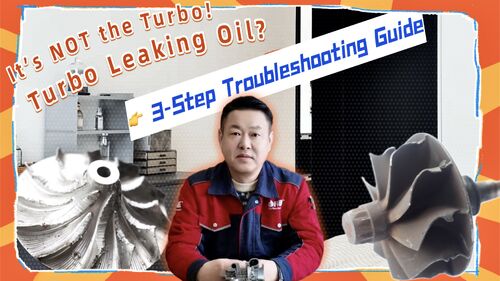
Turbo oil leak ≠ Turbo broken?     When many mechanics or car owners see oil stains around the turbocharger, their first reaction is "replace the rotor ."     Hold on! This could very well be a "false fault"! Core Principle: Why does a "false leak" happen?   Many people mistakenly believe that the inside of a turbocharger is physically completely sealed. In reality, it relies on the dynamic sealing of piston rings (relying on spring tension to expand).     The seal is effective only when the gas pressure > oil pressure, or when the pressure on both ends is balanced. Once an abnormality occurs in the intake, exhaust, or crankcase system, disrupting this "pressure balance," oil will be "sucked out" or "forced out" from the opening of the piston rings.   Complete Analysis of 11 Causes of False Oil Leaks To help you quickly distinguish between a "true fault" and a "false alarm," troubleshooting can be approached by examining the following four major systems:   I. Intake System Abnormalities (Forced In/Out) Leaks here are usually caused by oil being "sucked out" due to "excessive negative pressure." Oil Mist Separator Failure:  Separation is ineffective; oil vapor isn't blocked and mixes directly into the air entering the turbocharger, adhering to the intake port. Intake Pipe Deformation:  Poor intake airflow causes insufficient pressure at the intake (compressor) side, leading to oil from the bearing housing being "sucked out." Severe Air Filter Clogging:  Blockage at the very first stage of intake also prevents the compressor side from building up pressure, disrupting the balance. Leak/Disconnection in Compressor Outlet Pipe: Fault Point: The pressurized air escapes, causing air pressure to drop below oil pressure, leading to oil seepage. Special Warning:  Never run the engine without connecting the compressor outlet pipe for testing purposes! This will artificially create the illusion of an oil leak. II. Oil Return System Obstruction Oil cannot drain away properly, causing excessive oil pressure in the bearing housing, which directly forces the seal rings open. Oil Return Pipe Blockage: Impurities accumulate, preventing smooth oil flow. Oil Return Pipe Deformation: Damage during installation or collision reduces the pipe's cross-section, hindering oil return. III. Engine and Crankcase Abnormalities Excessive Engine Oil: The oil level is too high, submerging the oil return port and making oil return difficult. High Crankcase Pressure: A faulty ventilation system (PCV) creates high pressure inside the crankcase, opposing the oil return flow. Prolonged Idling: At idle, the turbocharger spins slowly and cannot build up effective air pressure sealing. Combined with long periods of stationary warming-up or traffic jams, oil seepage becomes very likely. IV. Exhaust and Oil Quality Issues Exhaust Blockage: A clogged catalytic converter or exhaust pipe traps exhaust gases, creating back pressure on the turbine side, leading to abnormal pressure and oil leakage. Dirty/Contaminated Oil: Lack of regular maintenance causes oil to thicken and accumulate impurities. This not only wears out bearings but also directly degrades sealing performance.​   Conclusion If you find an oil leak, don't panic! Check these 11 points first: inspect the air filter, pipes, oil level, and operating conditions.   Solve minor issues with minor expenses. Don't let a "false fault" cost you money unnecessarily!​
Read more
Latest company news about Does Turbocharger Oil Leak Mean It Must Be Replaced? Don't Panic! These 11 Situations Might Be
What Did They Say
Micheal from Nigeria
Your quality is good.
Habriz from Uganda
Habriz from Uganda
I have appreciated Fire Turbocharger’s good quality for many years and I want to be his exclusive turbo distributor!
Lewis from Zambia
Lewis from Zambia
Fire Turbocharger is good quality, No.1!
Mr.Zou from Malaysia
Just received your products, very good quality, thanks a lot!
Send your inquiry
Please send us your request and we will reply to you as soon as possible.
Send